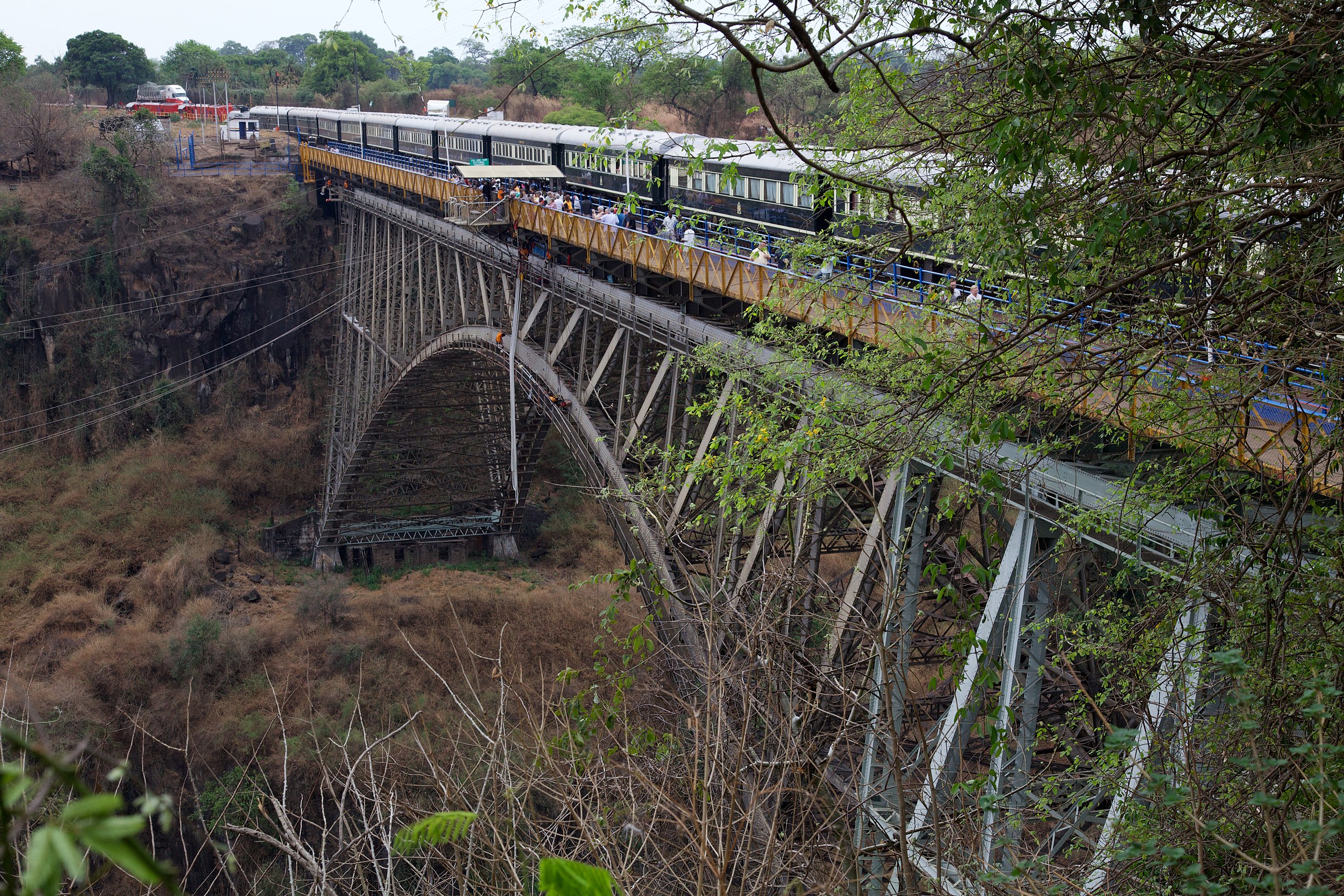
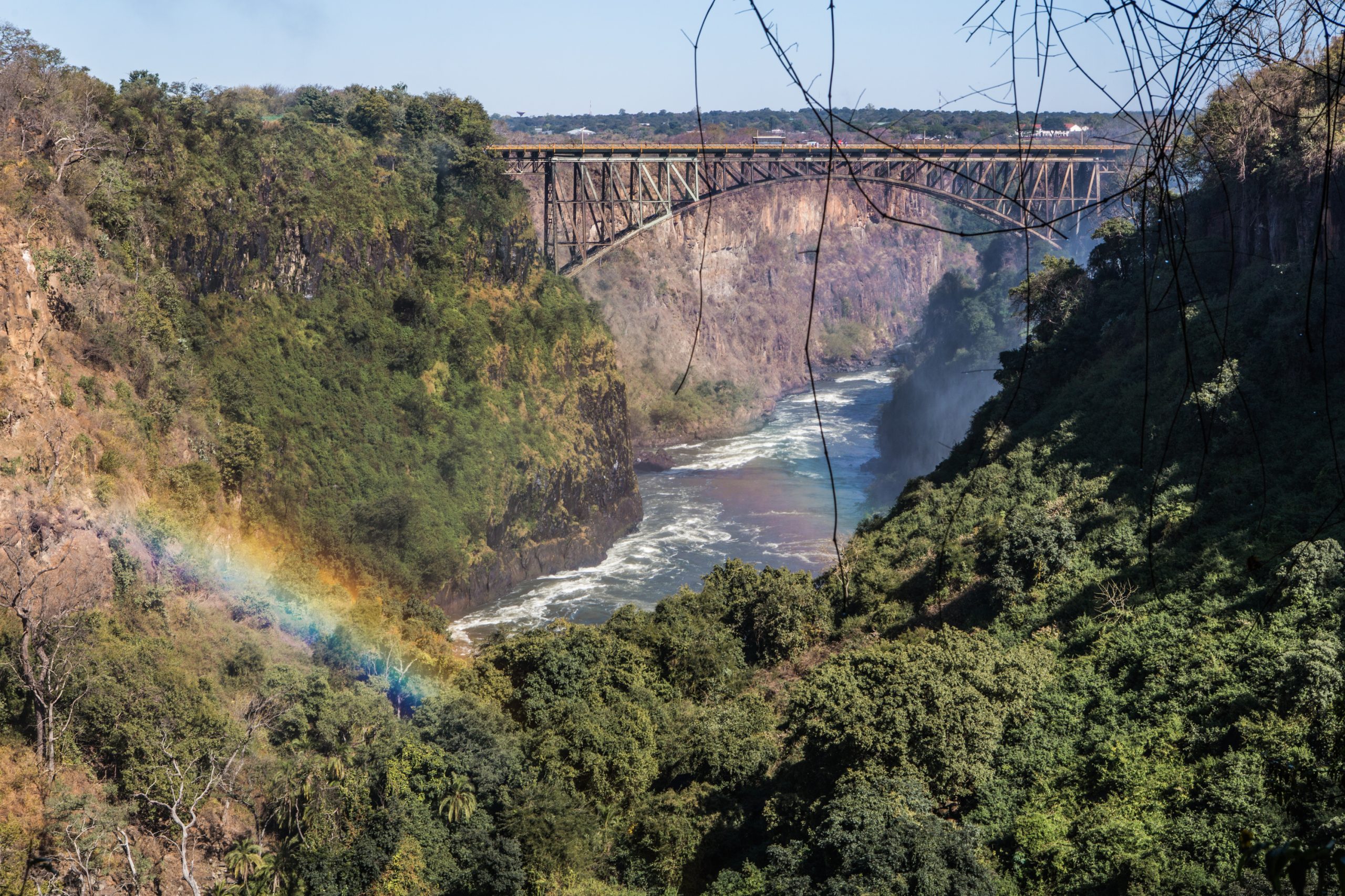
The Victoria Falls Bridge, connecting Zambia and Zimbabwe, is more than just a functional structure; it’s a masterpiece of engineering and a witness to history. Spanning the mighty Zambezi River near the iconic Victoria Falls, this bridge has stood for over a century, blending architectural brilliance with natural beauty.

The Vision Behind the Bridge
Commissioned in 1900 by Cecil Rhodes, the Victoria Falls Bridge was part of his grand vision to connect Cape Town to Cairo via railway. Though Rhodes passed away before its completion, his dream lived on. Designed by George Andrew Hobson, the bridge was constructed with a unique blend of steel and ingenuity, defying the challenges posed by the rugged terrain. As of today, the bridge has remained one of the major Livingstone attractions.
Engineering Feats Amidst Nature’s Power
Built in 14 months and completed in 1905, the bridge’s arch design stretches 198 metres, with a height of 128 metres above the Zambezi River. Transporting materials across the gorge was a remarkable feat, involving intricate cable systems and labour-intensive processes. Its construction stood as a testament to human innovation in the face of nature’s might.
A Thrilling Experience for Visitors
Now a popular tourist destination, the bridge offers more than a historical glimpse. Adventurous visitors can bungee jump from its heights as organised by hotels in the area such as The Royal Livingstone Victoria Falls Zambia Hotel by Anantara, take scenic tours, or walk along its span to enjoy panoramic views of Victoria Falls; a thrilling blend of history and adventure.
A Historical Witness
The Victoria Falls Bridge is not just a marvel of engineering but also a silent observer of history. From colonial expansions to the struggles for independence in Africa, the bridge has connected more than just two lands; it has united cultures and trade routes.