Bali, known as the “Island of the Gods,” boasts a myriad of stunning temples that reflect the island’s rich spiritual heritage and intricate architectural prowess. Set against the backdrop of lush tropical landscapes, cascading rice terraces, and pristine beaches, Bali’s temples are not only architectural marvels but also embodiments of the island’s deep-rooted cultural traditions and unwavering reverence for the divine – and exploring Bali’s temples is a journey into the heart and soul of this enchanting island paradise.

Lempuyang Temple | img via wikipedia commons
Lempuyang Temple
Perched at an elevation of 1175 meters above sea level, Lempuyang stands as Bali’s loftiest temple, boasting not only this distinction but also its awe-inspiring beauty. Upon arrival, visitors are immediately captivated by the enchanting panorama of Mount Agung framed by the renowned ‘Gates of Heaven.’, and the option to savour the temple’s splendour from the foothills or embark on a trek of over 1700 steps to its summit presents itself.
Tanah Lot Temple
Translated from Balinese, “Tanah Lot” signifies “Land in the Sea,” a fitting name for this iconic temple perched on the coastal cliffs of Tabanan regency, approximately an hour and a half’s drive from Ubud. Renowned for its dramatic rock formations sculpted by the relentless ocean waves over centuries, this Balinese temple exudes a timeless charm – one that’s spoken of in any world travel guide, like the ones found at Travel News Talk.
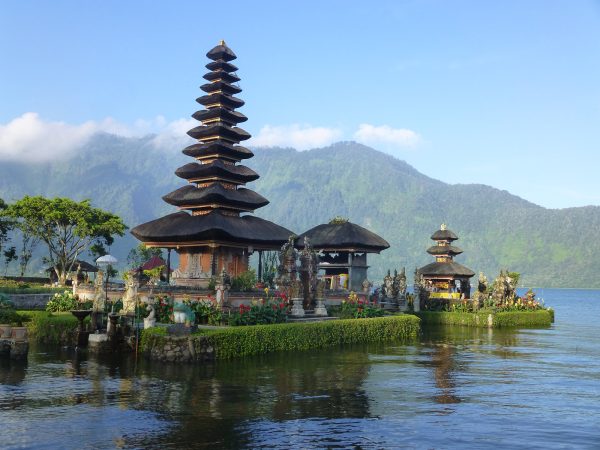
Ulun Danu Beratan
Ulun Danu Beratan Temple, another emblematic water temple and among the finest in Bali, is a must-visit destination on any itinerary exploring the island. Situated on the tranquil shores of Lake Bratan, nestled amidst the mountains near Bedugul, it is conveniently reachable within an hour’s drive from Ubud.
Goa Gajah Temple
Goa Gajah, also recognized as the Elephant Cave, stands as one of Bali’s most ancient and distinctive historical landmarks. Situated in the village of Bedulu, approximately a 13-minute drive from Ubud’s centre, this temple complex dates back to the 9th century, serving as a revered sanctuary for prayer and meditation. Despite its moniker, the Elephant Cave does not house any actual elephants within its sacred grounds.