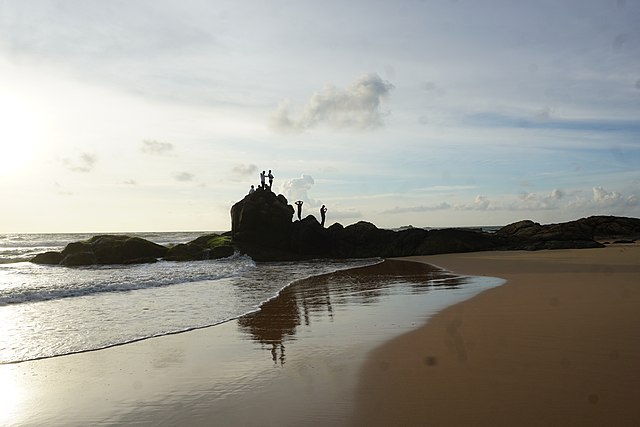
Bentota, a beautiful coastal town on the southwest coast of Sri Lanka, evolved from a colonial town into a peaceful coastal resort. This is its history chronicled, blending its colonial past with tourism and nature.
Post-Independence Growth
Following Sri Lankan independence in 1948, Bentota began to become a regional commercial centre. Construction of the Bentota Bridge in the 1970s again connected the town to surrounding districts, stimulating local development. Fishing and agriculture remained vital to the economy, alongside the town becoming an increasingly recognised tourist destination.
Bentota as a Contemporary Tourist Hotspot
Nowadays, Bentota is a top coastal haven, frequented by tourists for its golden beaches and peaceful surroundings. The town is famous for water sports, luxury resorts, and nature in the form of the Bentota River and its surrounding mangrove forests. A gem of a property, the NH Bentota Ceysands Resort is an ideal combination of nature and the modern luxury of a top Bentota beach hotel.

Early History and Colonial Influence
The past of Bentota goes as far back as centuries, but the area gained popularity during Portuguese and Dutch times. The Portuguese built a fort here in the 16th century, and then the Dutch came and fortified the town and made it a significant coastal settlement by establishing trade links.
The British Era and Development
Throughout the 19th century, British occupation brought further development to Bentota. The town was developed by the British as an administrative centre, and a plantation of coconut and rubber was set up. The colonial-era structures still prevail in most parts of the town, a reflection of its thriving past under British occupation.