
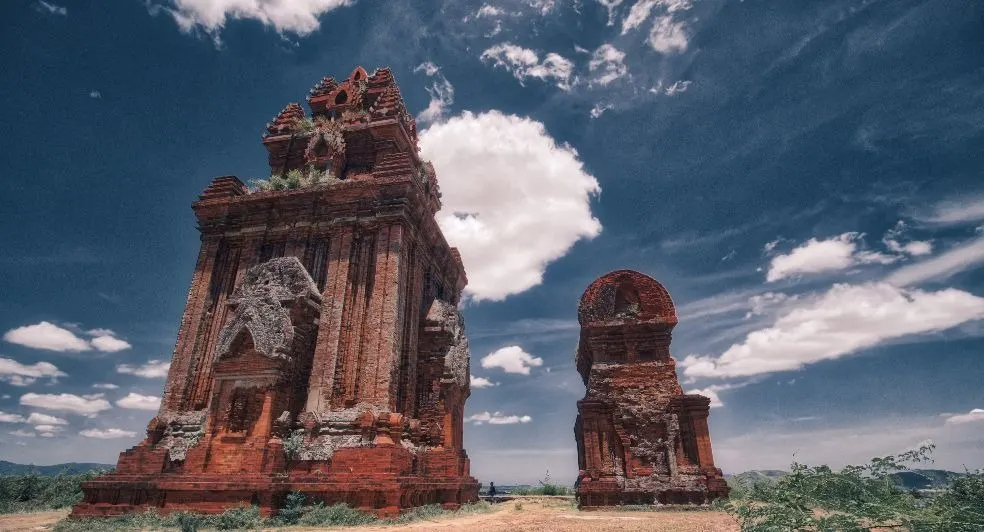
Quy Nhon, a coastal city in central Vietnam, is home to a rich cultural heritage dating back centuries. One of the highlights of visiting Quy Nhon is exploring the ancient Cham temples, remnants of the once-powerful Champa Kingdom.

The Ancient Splendor of Champa
The Champa Kingdom flourished in central Vietnam from the 2nd to the 15th centuries, leaving behind a legacy of impressive architectural marvels, namely religious sites reminiscent of the country’s former Hindu-Buddhist influences. The Cham temples in Quy Nhon are a testament to the advanced engineering and artistic skills of this ancient civilisation, home to diverse ethnic communities and a medley of religious influences.
Today, exploring the central coast with Anantara offers visitors the incredible opportunity to witness the Kingdom’s fascinating legacy, through the region’s preserved structures and heritage sites.
The Four Bánh Ít Towers (Thap Bánh Ít)
The Thap Bánh Ít, or Four Bánh Ít Towers, are a group of impressive Cham temples located in Quy Nhon. This cluster of 4 smaller towers is known for its intricate carvings and unique architectural features, available to visit through excursions from Anantara Quy Nhon Villas.
The Twin Cham Towers (Thap Doi Towers)
The Thap Doi Towers, also known as the Twin Towers, are another two iconic Cham temples located in Quy Nhon. Considered the most easily accessible Cham sites, these beautifully preserved structures offer a glimpse into the architectural style and religious beliefs of the Champa people.
Vijaya Citadel and Canh Tien Tower
Explore the ruins of the Vijaya Citadel, a fortified city built by the Cham people, and arguably one of the most important historic sites of the Champa Kingdom. Although no longer standing in its former glory, the citadel still showcases a few ancient relics, the remnants of a turbulent period for the former Kingdom. Visit the Canh Tien Tower, a Cham temple located within the citadel grounds.








.jpg)