
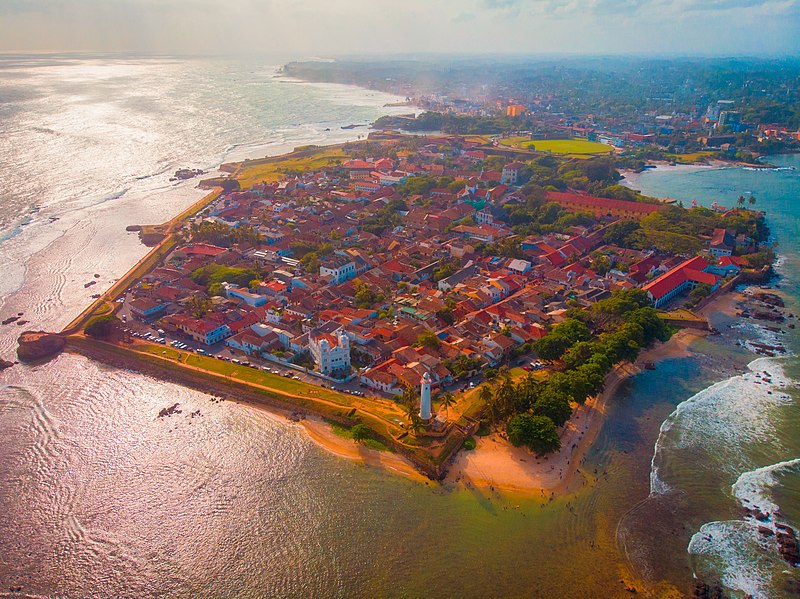
Galle Fort, perched on the southern coast of Sri Lanka, is a living museum that showcases the country’s rich colonial past and diverse cultural heritage. Constructed by the Portuguese in the 16th century and later fortified by the Dutch, Galle Fort is one of the best-preserved examples of a fortified city built by European colonialists in South Asia. With its narrow streets, colonial buildings, and panoramic sea views, Galle Fort offers a unique opportunity to step back in time and explore the layers of history that have shaped this fascinating locale. Here’s an in-depth look at the rich history of Galle Fort.

The Portuguese Beginnings
Galle Fort’s history began with the arrival of the Portuguese in 1505, who quickly recognized Galle’s strategic significance as a natural harbour. The Portuguese built the first fortification in 1588, primarily to defend against local and foreign threats. This early version of Galle Fort, known as “Santa Cruz,” was relatively small but served as an important stronghold for the Portuguese as they expanded their influence along the southern coast of Sri Lanka. The fortification included basic bastions, a watchtower, and a few buildings, marking the beginning of Galle Fort’s military history.
The Dutch Era: Fortification and Expansion
The most significant period in Galle Fort’s history came with the arrival of the Dutch in the mid-17th century. In 1640, the Dutch East India Company (VOC) captured the fort from the Portuguese, and over the next century, they transformed Galle into a major trading port. The Dutch rebuilt and expanded the fort extensively, adding massive stone ramparts, bastions, and an intricate network of streets that still exist today. The fort was fortified with cannons, a robust gatehouse, and a sophisticated drainage system to protect against both military threats and monsoon rains. Under Dutch rule, Galle Fort flourished as a bustling centre of commerce and culture, and many of the buildings from this period, such as the Dutch Reformed Church and the Old Dutch Hospital, remain a testament to their architectural legacy.
British Colonial Influence
In 1796, the British took control of Galle Fort, following the fall of the Dutch East India Company. Unlike their predecessors, the British made relatively few changes to the fort’s structure, recognizing its strategic importance as it was. Instead, they repurposed existing buildings and added their own architectural touches, such as All Saints’ Church and the Galle Lighthouse. The British also introduced modern amenities, including paved roads and a functioning clock tower. During this period, Galle Fort served as an administrative centre, and its streets were filled with British officials, traders, and a growing local population. The British influence can still be seen in some of the architectural styles and street names within the fort. If you want to see more British and Dutch-influenced architecture, you can opt for a stay at luxury boutique hotels in Sri Lanka, in the fort area that has followed the historic style, such as those by KK Collection.
A Melting Pot of Cultures
Galle Fort has always been more than just a military stronghold; it has been a melting pot of cultures and ethnicities. The fort’s diverse community included Portuguese, Dutch, British, Moorish traders, Sinhalese, and Tamil residents, each contributing to its unique cultural fabric. This diversity is reflected in the fort’s architecture, cuisine, and daily life. You can see it in the narrow, winding streets lined with buildings showcasing a blend of European and South Asian styles, the presence of mosques and churches side by side, and the vibrant markets and shops that offer everything from spices to traditional crafts. Galle Fort remains a living, breathing community that celebrates its multicultural heritage.
Preservation and Modern Significance
Today, Galle Fort is recognized as a UNESCO World Heritage Site, celebrated for its historical, architectural, and cultural significance. Efforts to preserve the fort have focused on maintaining its unique character while allowing for modern adaptations. The cobblestone streets are now filled with boutique hotels, art galleries, cafes, and museums, offering a blend of the old and the new. The fort has become a symbol of Sri Lanka’s ability to embrace its colonial past while moving forward into the future. Its walls, which once protected against invaders, now welcome travellers from all over the world, eager to explore its rich history.




.jpg)